
A wet spot in the yard doesn’t necessarily mean your water line needs replacing. But if a plumber finds a problem in the buried pipe supplying your home, getting to it may mean digging. How much digging depends on where the trouble is and what it will take to fix it.
Before you agree to a repair, you should understand why the crew needs to open that part of the yard. A small repair around one connection and a replacement running toward the house can leave you with very different amounts of work to plan around.
Start with what’s actually causing the problem
Tell the technician what you’ve noticed and when it started. Has the pressure dropped throughout the house, or just at one faucet? Does the wet patch stay wet through dry weather? Have you had a repair in the same area before?
Those details give the plumber a better starting point. Low pressure can come from several parts of the system. Water in the yard might be rainfall or irrigation, and a home on a well can have a pump or pressure-system problem without a damaged service line.
The underground water line brings water toward your home. The pipes inside distribute it to your fixtures, while the sewer line carries wastewater away. Knowing which part is causing trouble keeps the repair focused on the right problem.
If the source hasn’t been found, professional leak detection may be part of the next step. Ask what has been checked and what points to the outside line. You shouldn’t have to guess why a particular area needs digging up.
When the crew needs to expose the pipe
Sometimes the crew needs access to a damaged section or connection. In other cases, they need to see the pipe’s condition before deciding how much should be replaced. A new route can require excavation even when there’s no leaking pipe to remove.
What the plumber finds can change the recommendation. If the damage is limited and the surrounding pipe is in good shape, a repair may make sense. If the line has deteriorated more widely or keeps failing, another patch may leave you paying to open the yard again later.
Ask how a repair would leave the rest of the line, and what a replacement would change. If more damage turns up once the pipe is exposed, the crew should explain the additional work and get your approval before expanding the job.
Watch a FOX water-line project
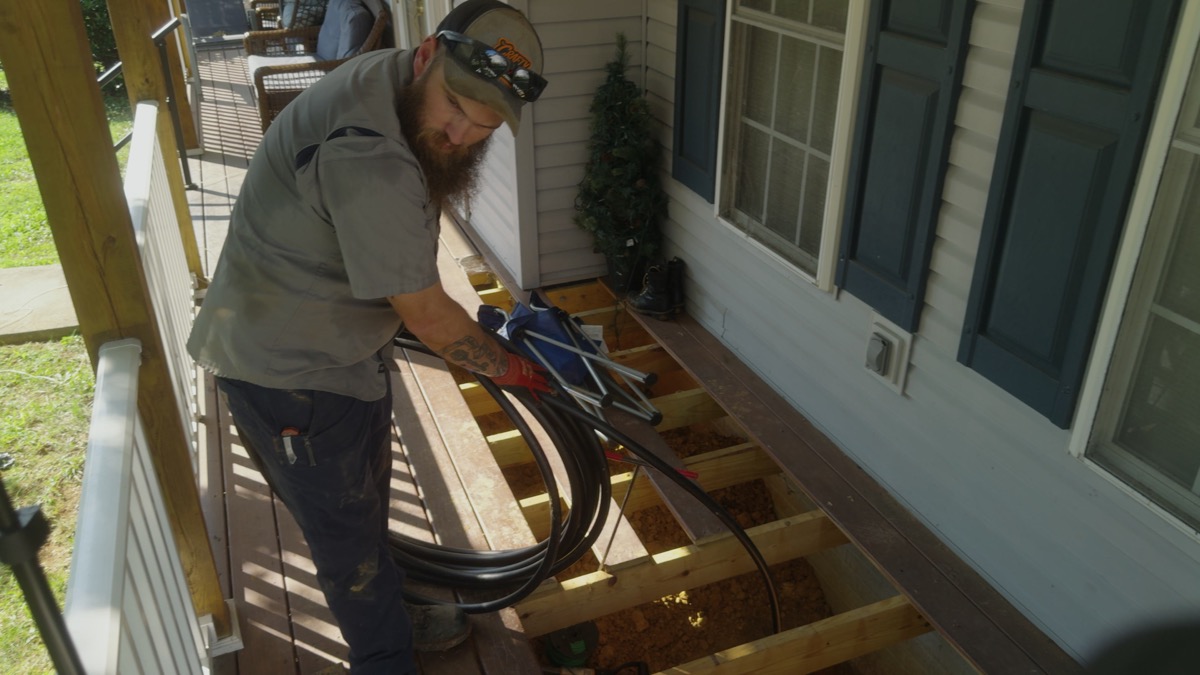
This video shows Crafty Fox’s August 18 water-line replacement project. It gives you a look at the work, but the route and amount of excavation at your home will depend on your property.
Watch the water-line replacement video on YouTube.
What makes one yard harder to work in than another?
An open lawn gives equipment room to move. A narrow space beside the house takes a different setup. Driveways and established landscaping can affect where the crew can work, where excavated soil goes, and what needs restoring afterward.
Walk through those details before the job starts. Point out any irrigation lines or buried connections to outbuildings that you know about. Ask how utilities will be located and whether private lines need separate checks; don’t assume every buried line will already be marked.
It also helps to know which areas you’ll need to keep clear. If the work affects your driveway or access to the house, you can plan for that before equipment arrives.
Will replacement mean a trench across the whole yard?
Not always. Some projects suit a method that reduces continuous trenching. Others need an open trench because of the route, access or ground conditions. The existing line and the connections also affect what’s practical.
A trenchless method can still need openings at access points. Ask the plumber to show you which areas would be disturbed with each proposed approach. The name of the method won’t tell you what your yard will look like afterward.
Compare the whole job when you’re looking at options. Pipe work is only part of it: access, connections, checks and restoration all belong in the discussion. A quote that leaves those details out is hard to compare with one that includes them.
Get clear on cleanup and water shutoff before work starts
Having the trench filled doesn’t necessarily mean new sod, replacement shrubs or finished pavement are included. Ask what restoration is covered in the quote and what you’d need to arrange separately. If settling requires attention later, find out how that would be handled.
You’ll also want to know when your water will be off and what could change the expected timing. That estimate needs to come from the plan for your home. A timeline from another job may not be useful if the crew is working around different conditions.
Before the excavation is closed, ask how the completed work will be checked and whether inspections apply. You don’t need to know the technical procedure yourself, but you should leave the conversation knowing what’s included and who is handling it.
Crafty Fox handles underground water-line repair and replacement, including new installations and excavation. Call 540-721-2300 to explain what you’ve noticed and arrange an assessment. You don’t need to choose a digging method before making the call.