
A well pump should respond when the pressure in the system drops. If it starts and stops every few seconds while someone is using water, that pattern is worth checking. Homeowners often call it “short cycling.”
The pump may be involved, but the pump itself isn’t the only possible cause. The pressure tank, controls, a plumbing leak, or an underground water-line problem can change how often the pump runs. Watching the pattern before the service visit gives the technician a much better place to start.
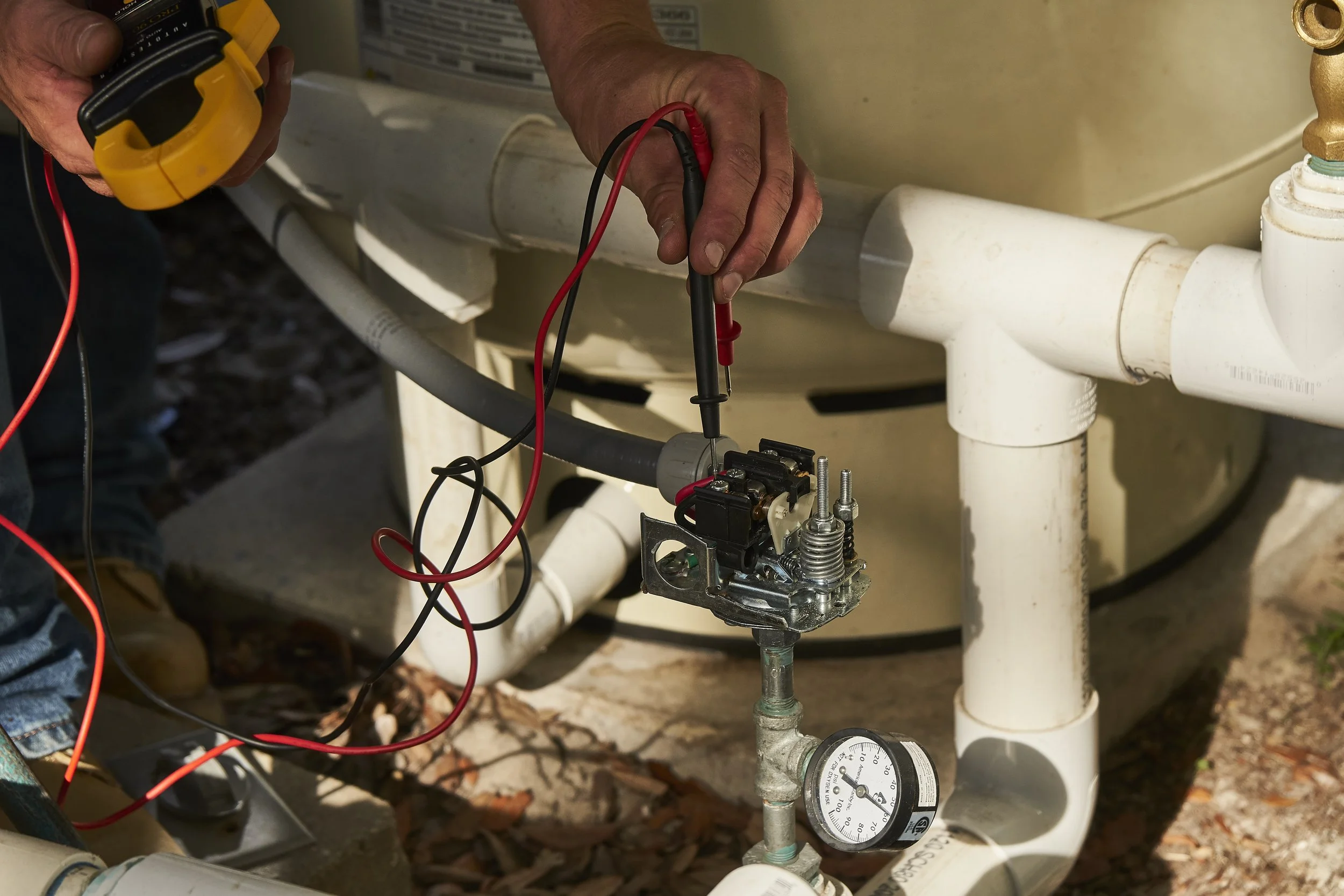
What does the cycling sound like?
Try to notice what happens when a faucet, shower, washing machine, or outdoor spigot is running. Does the pump switch on and off rapidly the entire time? Does water pressure rise and fall at the fixture? Does the problem happen everywhere in the house or only at one faucet?
Those details help separate a whole-system pressure problem from a restriction or fixture problem. If the pressure changes throughout the house, the technician may need to look at the well system, pressure equipment, controls, and the line serving the home. A problem at one fixture points the investigation in a different direction.
The pressure tank may be part of the problem
The pressure tank stores water under pressure so the pump doesn’t have to start every time someone opens a faucet. If the tank isn’t providing the expected reserve, the pressure can drop quickly and tell the pump to start again. The result may be a repeated on-off pattern during normal water use.
That doesn’t mean every cycling problem requires a new tank. The technician still needs to check the tank, pressure readings, controls, and the rest of the system before recommending a repair.
Controls can change when the pump starts and stops
The pressure switch and related controls tell the pump when to run. Worn, damaged, or poorly responding controls can affect that cycle. Electrical work around a well system is not a good place for guesswork, so avoid opening control boxes or adjusting settings yourself.
Instead, note whether the cycling began suddenly, followed a power interruption, or came with clicking, humming, or a loss of water. Share that information when you call.
Leaks and heavy water use can look similar at first
A pump will run more often when the home is using more water. Several fixtures running together may simply create more demand. A leak can also keep the system calling for water after the obvious use has stopped.
Check for safe, visible clues such as a running toilet, a dripping outdoor spigot, damp ground along the route of the water line, or pump activity when nobody is using water. Don’t dig or handle electrical equipment. The goal is to give the technician useful observations, not to diagnose the system yourself.

A long-running pump is a different symptom
Rapid starts and stops are different from a pump that runs for a long time without reaching pressure. They can overlap, but they don’t point to one automatic answer. Tell the office whether you hear frequent short cycles, one long run, or no pump activity at all.
Also mention low pressure, air at fixtures, muddy water, an obvious leak, or a recent change in the number of people or appliances using water. The timing matters. A problem that appeared overnight may lead to a different check than pressure that has slowly weakened for months.
Why replacing the pump first can miss the real problem
Buying a pump before the system is checked can leave the original pressure or line problem in place. A useful service visit starts with the symptom and follows it through the accessible parts of the system.
Crafty Fox checks well pumps, pressure tanks, controls, visible connections, and signs of a water-line problem. Some well-side work may require coordination with a well-service partner. If the concern is odor, staining, sediment, or scale while pressure remains normal, that belongs under water quality and treatment instead.
What to tell the plumber
Before you call, write down when the cycling happens, whether pressure changes at every fixture, and whether the pump runs when no water is being used. Add any recent power interruption, repair, leak, or change in water demand.
Those details save time and help the technician check the right parts of the system. For well-pump, pressure-tank, or water-supply problems in Southwest Virginia, contact Crafty Fox Services.